Model every request as a connected trace
I assign one trace identifier to the complete user journey and represent important operations as spans:- request intake, user context, and selected workflow;
- query transformation and source scope;
- retrieval candidates, filters, and reranking;
- model calls with configuration, token usage, and latency;
- tool calls with validated inputs and structured outcomes;
- safety, privacy, and authorization checks;
- final answer, citations, fallback, and user feedback.
Combine operational, quality, and outcome signals
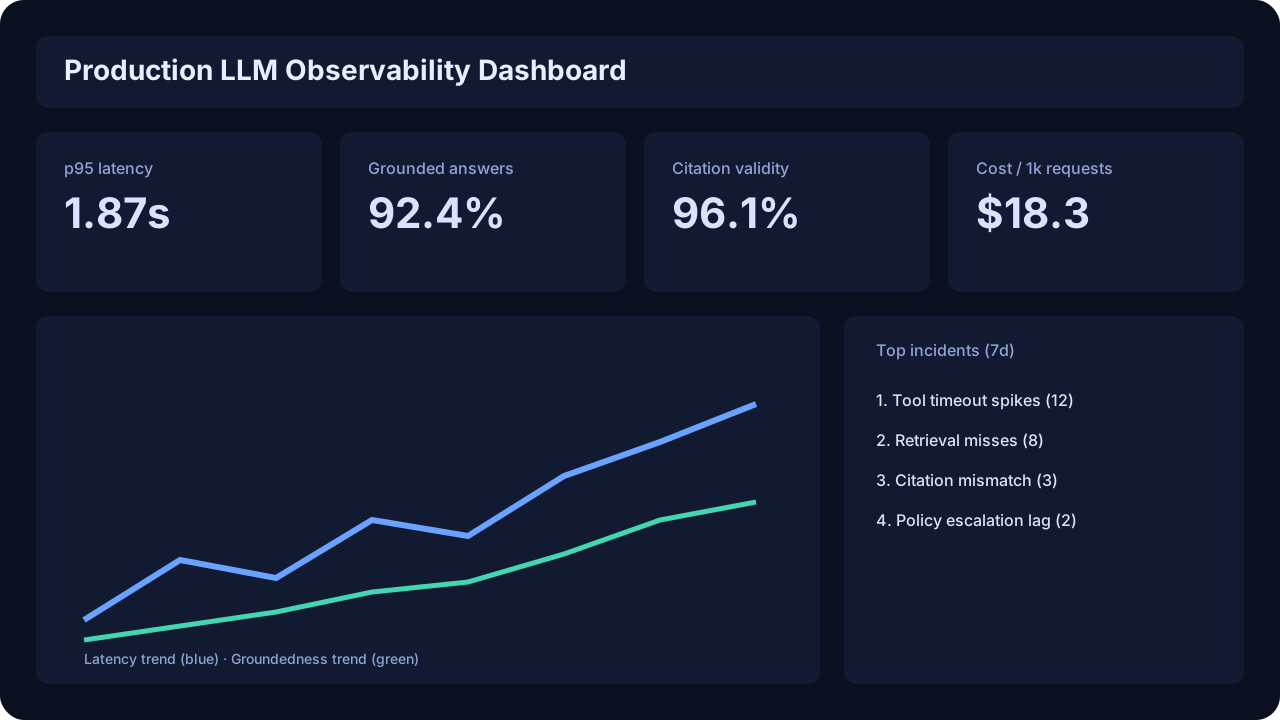
Infrastructure metrics remain necessary: request volume, error rate, saturation, and latency percentiles. LLM workflows add other dimensions:| Dimension | Useful signals | Diagnostic value |
|---|---|---|
| Execution | Tool retries, routing, fallback, completion state | Reveals broken orchestration |
| Evidence | Retrieval coverage, citation validity, source freshness | Separates data and retrieval failures |
| Quality | Groundedness, task completion, expert correction | Shows whether output is acceptable |
| Efficiency | Tokens, model calls, cache use, cost per task | Connects spend to successful work |
| Safety | Policy blocks, redaction, escalation, authorization | Exposes control behavior |
| Product | Re-asks, abandonment, accepted outcomes | Links technical quality to usage |
Preserve diagnostic value without collecting everything
Full prompts, retrieved documents, and model responses may contain personal, confidential, or regulated data. Observability design therefore needs data minimization:- classify fields before instrumentation;
- redact or hash sensitive attributes where possible;
- separate operational metadata from protected payloads;
- apply access controls and retention by data class;
- sample content only when it has a defined diagnostic purpose;
- preserve user and source permissions in trace access.
Build alerts around decisions and failure clusters
An alert should identify an action, not only a metric movement. Useful alert payloads include the affected workflow and segment, candidate and baseline versions, sample size, representative traces, likely failure layer, owner, and safe response. Different failures require different policies:- deterministic security or authorization violations may require immediate blocking;
- integration failures may activate a read-only fallback;
- release regressions can stop a rollout;
- gradual quality drift may trigger investigation and dataset refresh;
- cost growth without outcome improvement may trigger routing or prompt review.