Translate principles into a risk-based operating model
Broad principles such as fairness, transparency, and human oversight are important, but teams need operational questions:- What data can this system access and retain?
- Can it make or trigger a consequential decision?
- Who may override the output?
- What evidence must be shown to the user?
- What happens when confidence or source quality is insufficient?
- Which failures must block release or stop production traffic?
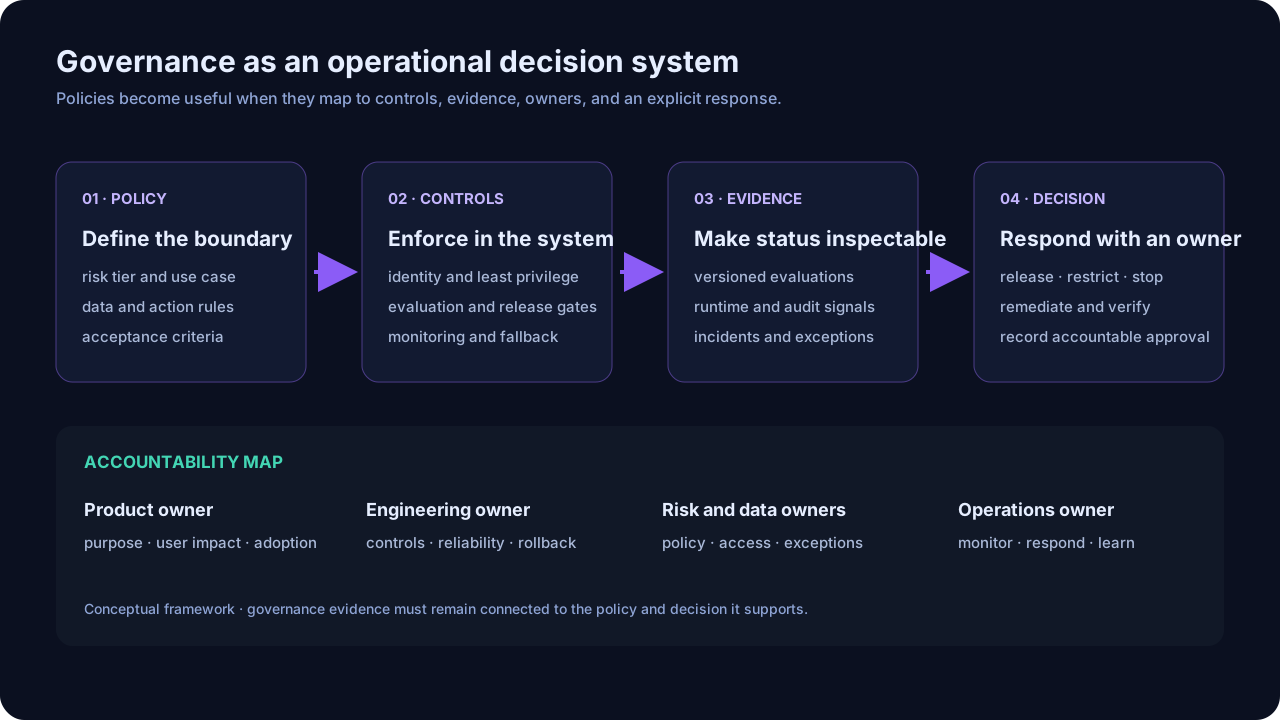
- Policy: the allowed, restricted, and prohibited behaviors.
- Control: the technical or procedural mechanism that enforces the policy.
- Evidence: the artifact proving that the control ran and showing its result.
- Decision: the accountable person or group that accepts, mitigates, escalates, or blocks the risk.
Place controls across the full lifecycle
Governance should begin at intake and continue in production:| Stage | Example controls | Evidence |
|---|---|---|
| Use-case intake | Risk tier, intended users, prohibited outcomes | Approved scope and named owner |
| Data and retrieval | Access rules, lineage, retention, PII handling | Source registry and access tests |
| Model and prompt | Versioning, safety tests, tool allowlists | Evaluation report and configuration history |
| Deployment | Segregated environments, release gates, rollback | Release record and approval rationale |
| Production | Traces, incident response, drift and quality review | Alerts, decisions, postmortems, remediation |
Automate repeatable controls without automating accountability
Policy-as-code is valuable for rules that can be evaluated consistently:- validating data schemas and allowed sources;
- checking that required evaluations completed;
- blocking prohibited tool permissions;
- enforcing minimum trace and version metadata;
- verifying that rollback artifacts exist;
- preventing deployment when a critical deterministic test fails.
Build an audit-ready evidence package
For every material release, I want a compact evidence package that contains:- intended use, excluded use, and risk tier;
- data, model, prompt, retrieval, and tool versions;
- evaluation datasets, results, failure review, and release gates;
- security, privacy, access, and retention decisions;
- named approval with any accepted residual risks;
- rollout, fallback, rollback, and incident response references.